
Education
Top Strategies for Choosing a College Major


Key Takeaways
- Understanding personal strengths and interests is crucial in selecting a college major.
- Consider job prospects and industry growth when making a decision.
- Seek advice from professionals and utilize campus resources to make an informed choice.
Assessing Personal Strengths and Interests
Deciding on a college major is an important choice that has the potential to impact your future. Begin by evaluating your strong points and areas of passion. Consider the subjects you performed well in during your high school years and the activities that brought you true joy. Resources such as personality assessments and career tests can offer helpful information about job industries that match your qualities. For example, delving into Liberal Arts and Sciences majors can provide a diverse selection of opportunities that overlap with various interests and skills. This method guarantees that you explore a wide variety of potential career options without being limited to a specific area of study. Recognizing your interests and abilities is crucial when making a well-considered decision. Spend some time contemplating your academic and extracurricular involvements to identify your strengths and what genuinely inspires you. This self-analysis could involve mentioning your hobbies, acknowledging any volunteer work completed, or reflecting on which coursework you have found most interesting.
Exploring Job Market Trends
Another essential factor to consider when selecting a major is the job market. Look into industry growth projections and potential job opportunities related to various fields of study. For instance, a report by the Bureau of Labor Statistics can provide comprehensive data on expected job growth in various sectors. It’s wise to take note of fields that are on the rise, such as technology, healthcare, and renewable energy. Opt for a major that not only interests you but also offers promising employment prospects. Researching market demands and emerging industries can lead to more informed decisions and better job security post-graduation. For instance, degrees in data science and cyber security are increasingly sought after due to the digital transformation of industries.
Seeking Guidance from Professionals
Consulting with professionals in your fields of interest can offer real-world insights. Reach out to alums, professors, or professionals working in industries you are considering. Ask them about the realities of their careers, the pros and cons, and any advice they might have for someone in your position. Personal connections through alumni networks or professional organizations can be particularly fruitful. Their experiences can provide a clearer picture and help you avoid potential pitfalls. Networking events, informational interviews, and mentorship programs are excellent ways to gather this invaluable firsthand information. Speaking to a professional who has navigated the same choices you are facing can be incredibly enlightening and offer perspectives you may not have considered.
Utilizing Campus Resources
Many universities provide students with career services, counseling, and resources to assist in selecting their majors. These services commonly consist of career guidance, training sessions, classes, and skill assessment exams. Utilizing these resources can significantly assist in forming a well-informed decision. Services like these could include practice interviews, workshops for creating resumes, and workshops on how to navigate career changes, all aimed at helping students succeed in the future. Universities might also organize job fairs where you can interact with hiring managers and gain insight into different industries. Engage in these activities to discover different career options and learn more about the majors that intrigue you. Feel free to inquire about the skills and education that recruiters prioritize in potential employees.
Considering Financial Aspects
Financial stability is another crucial aspect to consider. Evaluate the potential return on investment for different majors by looking at average entry-level salaries and the cost of your education. Some fields may require further education or certifications, which can add to your costs. For example, careers in law or medicine often necessitate advanced degrees, leading to higher educational expenses. Weighing these financial factors against your passion and interest will give you a balanced view of what to expect. Make use of salary guides and financial aid resources to get a comprehensive understanding of the financial implications. Websites that track salary data and job outcomes for graduates can be especially useful in this evaluation. Understanding these factors early can help you plan better financially and set realistic expectations for your future earning potential.
Participating in Internships and Extracurricular Activities
Internships and extracurricular activities offer hands-on experience and can be influential in your decision. Participating in these activities allows you to explore different fields without a long-term commitment. It’s a way to gain practical experience, see what a job in that field entails, and develop professional skills that are valuable regardless of the major you choose. It also provides a clearer understanding of what daily work in a particular field looks like, helping you make a more informed choice about your major. Engage actively in student organizations, internships, and community projects related to your areas of interest. Many students find their passions and make their career decisions through these experiences. Plus, these activities can also make your resume stand out to potential employers.
Staying Flexible and Open to Change
It’s important to remember that your first choice of major doesn’t have to be final. Many students change their majors as they evolve and gain more knowledge about their interests and the job market. Stay flexible and be willing to adapt as you go through your college journey. Institutions often have advisors who can assist you in making a smooth transition if you decide to switch majors. This versatility can eventually lead you to a more fulfilling career path. Continually reassess your goals, interests, and market situations to stay aligned with your academic and professional aspirations. Personal growth and new opportunities often arise that make a change of direction not only feasible but beneficial.
Conclusion
Choosing a college major is a multifaceted decision that requires self-reflection, research, and seeking guidance. By assessing your strengths, exploring job market trends, consulting with professionals, utilizing campus resources, considering financial aspects, and gaining hands-on experience, you’ll be better equipped to make an informed choice. Remember to stay flexible and open to change as you navigate this critical phase of your educational journey. Embrace the process, seek guidance when needed, and stay aligned with your goals to ensure a rewarding academic and professional future.

Introduction
Preparing to leave home for college is a significant life event that often comes with a whirlwind of emotions. It’s a time filled with anticipation, uncertainty, and countless to-dos that can feel daunting without the right approach. Moving away for college can feel both thrilling and overwhelming, especially when you consider all the steps involved—from sorting and packing to actually settling into a brand-new environment. For many students, this transition marks their first taste of independence, making it both a milestone and a challenge. Successfully navigating this process requires careful planning, resourcefulness, and a positive attitude. By taking advantage of affordable student moving services early in the process, you can cut down on both stress and expenses while freeing up time to enjoy the start of your new adventure. Smart organizing, space-saving solutions, and the support of friends or family can turn what might seem like an overwhelming task into a memorable and positive experience. With the right preparation, your college move becomes more than a chore—it becomes the first step in a transformative journey. Embrace the changes ahead, knowing each box packed brings you closer to new growth and opportunity.
Start with a Comprehensive Checklist
The moving process begins long before you load up your car or book a van—preparation is the secret to a smooth move. Creating a detailed checklist is key to ensuring you bring everything you need without overpacking or forgetting essentials. Divide your list into categories such as bedding, toiletries, clothing for various weather conditions, electronics, important documents, and academic supplies. Don’t forget to include anything unique to your campus like shower caddies or specialized storage items for your new space.
To keep things manageable, classify your items as “must-haves,” “nice-to-haves,” and “non-essentials.” This way, if you find yourself tight on space, you know what can be left behind. Smaller pre-move tasks like confirming move-in and orientation dates, requesting any necessary paperwork, arranging transportation, and getting in touch with roommates can go a long way to reduce last-minute panic. For students moving long distances, check deadlines for dorm check-ins and off-campus housing lease agreements. Every item you check off provides peace of mind as moving day progresses.
Embrace Space-Saving Packing Techniques
When moving into a typical college dorm or apartment, maximizing every inch of space is crucial for comfort and convenience. While it’s tempting to bring everything, the key lies in smart packing and only bringing what adds value to daily college life. Start with these proven space-saving hacks:
- Roll your clothes: Rather than folding, rolling clothes saves space in suitcases or bins and helps minimize wrinkles. This tactic is a favorite among seasoned movers and travelers alike.
- Use vacuum-sealed bags: Vacuum bags are unbeatable for compressing bulky items like blankets, jackets, and pillows. These bags are convenient for college students in places with wide seasonal temperature changes.
- Opt for stackable storage bins: Clear, stackable bins are a lifesaver for transporting items and organizing your new space. When you can see what’s inside, unpacking is much simpler, and these bins fit easily under beds or in closets.
Group similar items together and label all boxes clearly by room or type so unpacking takes less time. Keep a dedicated bag or bin with “first-night essentials” like toiletries, a change of clothes, basic snacks, and chargers—this makes the first night less stressful and more comfortable. Taking time to pack efficiently now will pay off with an easier move and a less cluttered start at school.
Explore Affordable Moving Options
Moving expenses can mount up faster than you might expect, but there are plenty of student-friendly solutions to keep costs in check. Using your own vehicle or borrowing one from a family member or friend is usually the most cost-effective solution for local moves or minimal belongings. If your haul is more substantial, look into renting a small moving truck or trailer; companies like U-Haul offer flexible options ideal for short-term needs.
Many moving companies specialize in student moves, offering both shipping for boxes and affordable, short-term storage. Services like these are particularly helpful if your campus is out of state or transitioning between summer and fall semesters and can’t take everything home. Don’t forget to compare prices and look for student discounts, as many businesses run college moving specials around move-in season. Consider networking with new classmates to split rental or storage costs, which is often cheaper and more fun.
Engage Friends and Family
While moving can feel like a burden, involving friends and family not only lightens the workload but enhances the entire experience. Invite friends over, put on a great playlist, and share pizza or your favorite take-out—you might even create some inside jokes and memories you’ll cherish for years. This support system transforms what could be a stressful day into a group effort where everyone feels included and needed.
Delegating tasks is also easier when there’s more than one person—assign someone to manage logistics, ask another to deal with electronics and small furniture, and assign your strongest helpers to heavy lifting. The process goes faster, smoother, and provides a perfect opportunity to bond or say goodbye before you leave for school. Returning the favor when friends move is a great way to maintain connections and pay it forward.
Stay Mindful of Safety and Health
- Proper lifting: Always bend at the knees and lift with your legs rather than your back to avoid injuries. Means like dollies or moving straps can make a difficult job manageable—even for heavier objects.
- Hydrate and pace yourself: Particularly during hot weather, make a point to take regular water breaks, eat energy-boosting snacks, and recognize when it’s time to pause. Overexertion is avoidable with planning.
- Wear appropriate clothing: Closed-toed shoes and comfortable, breathable clothing are necessary. Avoid anything that might cause you to trip or restrict movement as you lift and carry.
It’s important not to push through fatigue: take breaks and know your limits. Asking for help with awkward or heavy objects will help prevent injuries and ensure the move remains safe for everyone involved.
Utilize Campus Resources
College move-in days are often carefully coordinated to ease the transition for new students and their families. Many campuses have streamlined the process with the help of orientation leaders, residence hall staff, and student volunteers who assist with unloading vehicles and carrying items into dorms. Some schools offer helpful tools like large rolling carts, designated unloading zones, and temporary storage options for early or overflow arrivals. Understanding what services your specific college provides—typically outlined in pre-arrival emails, welcome packets, or student handbooks—can reduce confusion and make the experience smoother and less overwhelming.
Beyond move-in logistics, orientation events are a valuable introduction to campus life. Attending these programs familiarizes you with key locations such as dining halls, academic buildings, and student service centers. You’ll also learn about resources like tech support, maintenance requests, and where to store additional belongings if needed. Most importantly, orientation helps build community—offering opportunities to meet peers, join student groups, and begin forming lasting friendships and a reliable support system.
Plan for Unpacking and Organization
Arriving at your new dorm or apartment is only the halfway mark; how you unpack and organize will impact your comfort all semester long. Begin with the essentials: unpack bedding, toiletries, and chargers first so that you’re set for your first night. Assign each item a specific spot as you go—this cuts down on clutter and makes it easier to settle in.
- Unpack essentials first: These items will keep you comfortable and connected as you settle in.
- Organize as you go: This approach streamlines the process and helps maximize even the smallest rooms or dorm closets.
- Personalize: A couple of framed family photos, a soft rug, or some string lights can make a new space feel like yours.
Staying on top of organization as you unpack means your space will be set up the way you want it from the start, so you can focus on making friends and getting familiar with campus rather than searching through piles later.
Stay Flexible and Positive
Even with careful preparation, move-in day can still bring unexpected surprises. These hiccups can easily throw things off course, from delayed arrivals to misplaced essentials or sudden changes in plans. However, staying calm and adaptable can make a world of difference. Flexibility is a powerful tool during times of transition, helping you stay grounded while navigating the unpredictable. Rather than fixating on what went wrong, focus on finding quick solutions, keep a sense of humor, and don’t hesitate to lean on others for support. Every moving experience teaches valuable lessons—whether it’s mastering time management, learning how to prioritize, or building resilience under pressure.
To ease the transition, begin the process early and pack intentionally, using checklists and space-saving techniques. Take advantage of available resources, including student services or community support. Most importantly, surround yourself with helpful friends or family. With thoughtful planning and a positive attitude, you’ll not only survive move-in day—you’ll thrive as you step confidently into this exciting new chapter.


As educational paradigms shift to meet a rapidly changing world, early childhood programs are shaped by research and creative models. Nurturing a child’s curiosity is as important as academic rigor, ensuring engaging, responsive, and meaningful learning. Understanding key components of enriched early education helps parents, educators, and communities make informed choices to support each child’s potential.
The earliest years of a child’s life are critical in shaping the academic, social, and emotional foundation they will build upon for years. During this formative period, searching for exceptional educational experiences becomes essential, leading many families to consider private school enrollment as a pathway toward enriched early childhood learning. Innovative strategies, supportive environments, and collaborative approaches are at the heart of successful early education—paving the way for lifelong curiosity and success.
Why Early Childhood Education Matters
Early childhood education builds the foundation for cognitive, emotional, and social development. High-quality programs prepare children for school and reduce academic struggles later. Structured, nurturing environments enhance language, math, and social-emotional skills, affecting future learning and growth. Beyond academics, such settings boost confidence, resilience, and curiosity, fostering independent thinking and adaptability vital in a changing world. Engaged children become adults who collaborate, innovate, and communicate effectively.
Keys to Engaging Young Learners
Engagement in early learning goes beyond passive facts; it ignites imagination and exploration. Activities like storytelling, play, and practical tasks foster a love of learning. Educators tailor activities to each child’s interests, developing various skills and styles. Success depends on a flexible curriculum encouraging questions, projects, and collaboration. When education feels personal, students see learning as an adventure, not a chore.
Collaborative Learning and Social Skills
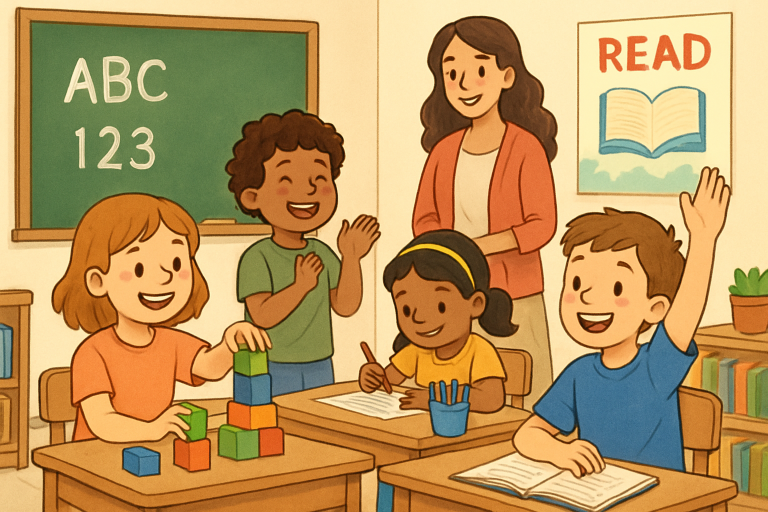
Group-based learning activities are powerful tools for building communication, empathy, and teamwork skills from an early age. Students engage in collaborative tasks and learn to listen actively, share ideas, resolve conflicts, and respect different perspectives. Such experiences are crucial for healthy identity development and help lay the foundation for competent social interaction in adulthood.
The Role of Parental Involvement
Parental involvement is crucial for early childhood success, with strong outcomes when families partner with teachers to reinforce learning and create supportive homes. Regular communication builds trust and allows early intervention. Simple acts like reading, playing educational games, and encouraging curiosity support development. When parents show enthusiasm for learning, children tend to develop positive self-esteem and perseverance, according to studies.
Play-Based Learning Strategies
Play is universal for children, fostering problem-solving, decision-making, and emotional skills through activities like imaginative play, building, and arts. An ideal setting balances free and guided play, encouraging discovery, choices, and self-control. Play-based learning builds self-regulation, creativity, and adaptability, while role-playing and cooperative games teach societal roles and empathy. Combining structured and child-initiated play provides a well-rounded early education approach.
Integrating Technology Wisely
In an increasingly digital world, technology can complement traditional learning when used thoughtfully. Interactive games and educational apps capture learners’ attention, reinforce concepts, and foster digital literacy. Quality over quantity is key; digital tools should focus on engagement, problem-solving, and creativity rather than passive screen time. Educators guide children’s tech experiences by choosing age-appropriate apps and modeling responsible digital citizenship. Combining technology with face-to-face activities ensures it enhances understanding without replacing authentic interaction.
Assessing Growth Beyond Grades
Assessment is most effective for young learners when it includes observational notes, portfolios, and self-assessment, providing a comprehensive view of progress across cognitive, social, and emotional areas. Offering constructive feedback builds self-confidence and fosters ownership of growth. This holistic approach helps educators and parents celebrate milestones and address challenges individually, supporting healthy development.
Long-Term Benefits of Early Enrichment
High-quality early education benefits children beyond elementary years, including advanced literacy and numeracy skills, higher graduation rates, improved physical and mental health, and increased lifetime earnings. As society evolves, fostering innovation and adaptability in young citizens is crucial. Investment in early enrichment benefits communities and future generations, creating a cycle of opportunity, achievement, and well-being.
Conclusion
Early childhood education is crucial for lifelong success. It combines academic readiness with social, emotional, and creative development. It equips children with confidence and adaptability to face future challenges. Investment in early years cultivates capable, compassionate, and resilient individuals, shaping healthier societies and stronger economies. Prioritizing education is an investment in a brighter, more equitable.

Academic success at university is influenced by more than just textbooks and lectures; the environments students inhabit play a crucial role in determining how effectively they learn, concentrate, and thrive. From physical surroundings to emotional atmosphere, various environmental factors can either support or hinder academic performance. Understanding these influences is essential, especially for students settling into new accommodation or navigating the demands of independent study.
Physical Environment and Cognitive Function
The physical conditions of a learning space, such as lighting, noise levels, air quality, and temperature, have a direct impact on a student’s ability to concentrate and retain information. Findings from a large-scale study involving over 21,000 students showed that test scores were higher in daylit classrooms, highlighting a clear link between daylight availability and improved human performance.
Similarly, exposure to excessive noise, whether from traffic, roommates, or shared facilities, can significantly impair working memory and reading comprehension. A quiet, well-ventilated space with ergonomic furnishings helps maintain mental clarity, allowing students to focus for longer periods without fatigue.
Design of Study and Living Spaces
The layout and quality of accommodation also influence study habits. Cluttered or cramped environments can increase stress levels and make it harder to focus. On the other hand, a well-organised room with designated zones for sleep, study, and relaxation encourages structure and discipline, both vital for academic consistency.
Modern student accommodation often incorporates shared study lounges, individual workstations, and communal areas that support different learning styles. These spatial cues promote productive behaviours while also providing variety, which can prevent burnout and increase engagement.
Social Environment and Academic Mindset
A student’s immediate social surroundings, including flatmates, peers, and neighbours, can shape attitudes towards learning. Environments that foster collaboration, mutual respect, and shared academic goals often lead to improved study habits and motivation. For example, living in a residence where others prioritise study can create positive pressure, encouraging similar behaviour.
By contrast, environments marked by social tension, distractions, or a lack of community can reduce concentration and increase feelings of isolation, particularly for international students adapting to new cultural norms. The right balance between privacy and community is essential for maintaining focus without sacrificing social support.
Emotional Climate and Psychological Safety
Students are more likely to excel academically when they feel safe, secure, and emotionally supported in their environment. Factors such as feeling at home, the ability to personalise one’s space, and having access to support networks all contribute to a sense of wellbeing, which is foundational to learning.
Stressful environments, including those with poor maintenance, unpredictable disruptions, or limited personal space, can raise cortisol levels and negatively affect memory and information processing. Creating a calming, affirming space helps reduce academic anxiety and supports better cognitive function.
Proximity and Access to Resources
The location of student accommodation affects more than just convenience; it impacts energy levels, time management, and academic participation. Living near campus, libraries, or study hubs can reduce commute-related fatigue and free up hours for coursework and rest.
Reliable access to high-speed internet, printing facilities, quiet zones, and nearby amenities also shapes study outcomes. In cities like Sydney, where travel times can vary widely, having accommodation within easy reach of both educational and everyday essentials, like those available through iglu.com.au, supports a seamless academic lifestyle.
Shaping Success Through the Right Environment
The environment a student lives and studies in is far more than a backdrop; it is a dynamic influence on academic performance. Whether it’s the physical setup of a room, the culture of a shared space, or the emotional tone of a household, every environmental element contributes to how well a student learns, focuses, and achieves. By recognising and prioritising environments that foster concentration, stability, and well-being, students can set themselves up for academic success.
-

 Entertainment1 year ago
Explore The Kristen Archives: A Treasure Trove Of Stories & More
-

 Entertainment2 years ago
Sandra Orlow: Exploring the Life and Legacy of a Cultural Icon
-

 Business2 years ago
What is O Farming: How to Make Money Online and Its Start-Up Benefits
-

 Technology2 years ago
Geekzilla Radio: Your Portal to the Ultimate Geeky Adventure!
-

 Law1 year ago
Protect Your Vehicle with These Smart Motor Insurance Strategies
-

 General2 years ago
Baby Alien Fan Bus: Watch Parts 2 & 3 on Twitter, Reddit!
-

 Fashion2 years ago
DIY Fashion: Customizing Your Black Homecoming Dress for a Personalized Touch
-

 General2 years ago
Diana Nyad & Bart Springtime: A Swim to Success